speakers

FILIPA SOARES
Filipa Soares holds a PhD in Environmental Geography from the University of Oxford, and her background is in Anthropology (BA and MA, New University of Lisbon). Her research examines the practices and politics of wildlife conservation and forest management in Europe – with a particular focus on rewilding, reintroductions, and (wild)fire – as well as the spatiotemporal and more-than-human entanglements associated with these governance regimes.
Filipa’s PhD thesis, funded by the Portuguese Foundation for Science and Technology (FCT) and the UK’s Economic and Social Research Council (ESRC), analysed the socio- and biopolitical implications of rewilding as a new way of conceiving, governing, and choreographing ecological disturbances in Britain. Afterwards, she was part of the team of the FCT-funded research project “People and Fire: Reducing risk, living with risk” (2020-22) at the Institute of Social Sciences, University of Lisbon, on wildfire mitigation and adaptation in Portugal, where she conducted research on community-led wildfire recovery practices.
Filipa is currently a Junior Research Fellow at the Institute of Social Sciences, University of Lisbon, working on the ABIDE project – “Animal Abidings: recovering from disasters in more-than-human communities”, funded by the European Research Council.

DAN PODJED
Dan Podjed, PhD, is a Senior Research Fellow at the Research Centre of the Slovenian Academy of Sciences and Arts (Institute of Slovenian Ethnology), an Associate Professor at the University of Ljubljana (Faculty of Arts), and a Field Expert at the Institute for Innovation and Development of the University of Ljubljana. He is also a Visiting Fellow at the Vrije Universiteit Amsterdam.
He has led several research and development projects, including Isolated People and Communities in Slovenia and Croatia (J6-4610) and is the Principal Investigator of the national research programme Ethnological, Anthropological and Folklore Studies Research on Everyday Life (P6-0088). He is also the founder and Executive Advisor (Convenor from 2010 to 2018) of the EASA Applied Anthropology Network and the initiator of the international event Why the World Needs Anthropologists, which has been organised since 2013. The findings of the symposium have been published in book form by Routledge, with the first edition appearing in 2021 and the second edition in 2025.
His current research interests include isolation, crises, human-technology interactions, and sustainable lifestyles. His recent pair of books – a novel and a scientific monograph published in Slovenian under the joint title Crisolation – explores the lives of people who, during a time of permanent crisis, spend their days in front of screens and within four walls. The Slovenian Research and Innovation Agency recognised his work twice as an outstanding scientific achievement, in 2011 and 2021. He also received the honorary title Science Communicator of the Year 2024 from the Slovenian Science Foundation.

LANA PETERNEL
Lana Peternel, PhD, is a Senior Research Fellow at the Institute for Social Research in Zagreb. She has led two scientific research projects: Comparison of National and Religious Identities of High School Students in Croatia and Slovenia (Ministry of Science and Education of the Republic of Croatia and ARRS) and Anthropological Research of Minority Religions in the Historical Archives of Croatia (UKF/HRZZ).
She currently leads the bilateral Slovenian-Croatian project Isolated People and Communities in Slovenia and Croatia – ISOLATION (HRZZ IPS-2022-02-3741). She regularly collaborates on numerous interdisciplinary domestic and international projects, with a particular focus on themes related to the anthropology of space, identity, marginalization, and social change. Lana Peternel teaches the course Digital Anthropology at the Zagreb University of Applied Sciences. She has advanced her scientific training at several renowned international institutions, including the Max Planck Institute for Social Anthropology in Halle, the University of Oxford (COMPAS), the University of Amsterdam, University College Cork in Ireland, and the Faculty of Arts in Ljubljana. Since 2023, she has been the chief editor of the scientific journal Sociologija i prostor (Sociology and Space). She is the co-author of the book Disappeared Settlements in the Republic of Croatia: Historical-Demographic-Anthropological Perspectives (2021). Her research interests include small isolated communities, ethnic and religious identities, and sustainability. Her scientific articles have been published in journals such as Focaal, Dialectical Anthropology, Shima, Anthropological Journal of European Cultures, Journal of Muslims in Europe, and Traditiones.

RUTH KUTALEK
Ruth Kutalek, is a Medical Anthropologist and Associate Professor at the Unit Medical Anthropology and Global Health, Department of Social- and Preventive Medicine, Center for Public Health, Medical University of Vienna. Her research focuses on anthropological perspectives of infectious diseases and health crises, as well as environment, health and vulnerabilities.
She has been principal investigator in several EU and nationally funded projects, such as SoNAR-Global, ISIDORe or CAVE, and is currently involved in Sonar Cities, a Horizon Europe project with the aim to enhance resilience in the face of health emergencies and disasters by promoting the inclusion of marginalized or excluded populations in preparedness and response efforts.

DAGMAR NARED
Dagmar Nared is a PhD student and junior researcher at the Department of Ethnology and Cultural Anthropology, University of Ljubljana. She holds two master’s degrees, one in Sociology from the University of Oxford and another in Anthropology from the University of Ljubljana. During her fieldwork in Hatay, she interned at the SU Gender Center. Previously, she interned at the Institute of Ethnology and Folkloristics in Zagreb and held a fellowship with ASEF Slovenia. Her research combines love, gender and visual anthropology to explore the emotive and affective dimensions of everyday life, with her PhD focusing on life in post-catastrophe Türkiye. Beyond her research, she is also active in science communication and, together with a colleague, received an award for their collaborative ongoing project AGORA.

KASIA MIKA-BRESOLIN
Dr Kasia Mika-Bresolin is a Senior Lecturer in Comparative Literature at Queen Mary, University of London. Prior to that, she was a Lecturer in Literary and Cultural Analysis at the University of Amsterdam and held a postdoc fellowship at KITLV (The Royal Netherlands Institute of Southeast Asian and Caribbean Studies) in Comparative Caribbean Studies.
Her monograph, Disasters, Vulnerability, and Narratives: Writing Haiti’s Futures (Routledge 2019) uses narrative responses to the 2010 Haiti earthquake as a starting point for an analysis of notions of disaster, vulnerability, reconstruction and recovery. The monograph to concepts of hinged chronologies, slow healing, and remnant dwelling, offering a vision of open-ended Caribbean futures, full of resolve. Her publications appeared in Paragraph Journal, Third Text, Modern and Contemporary France, Area, Journal of Haitian Studies, Moving Worlds, Environmental Humanities (forthcoming) and Contemporary Literature (forthcoming), among others. She is the producer of the award-winning short documentary, Intranqu’îllités (2019), on art and creativity in Haiti (now available to the public on Aeon).

MARS EDWENSON BRIONES
Mars Edwenson Briones is a doctoral researcher at the Multidisciplinary Environmental Studies in the Humanities (MESH) research hub of the University of Cologne in Germany. His research draws upon the environmental humanities, disaster studies, and island studies to examine how art, literature, and discourses about catastrophes in the Eastern Visayas region of the Philippines can contribute to ecological, decolonial, and archipelagic perspectives on disasters. He combines methods in the environmental humanities, including ethnography, with art making and poetry writing. In 2020, he completed his master’s degree in Art Studies (Art History) at the University of the Philippines Diliman. In 2013, he obtained his bachelor’s degree in Communication Arts from the University of the Philippines Tacloban, where he then served as a faculty member until 2022.

BLAŽ BAJIČ
Blaž Bajič is an Assistant Professor and a researcher at the Department of Ethnology and Cultural Anthropology, Faculty of Arts, University of Ljubljana. As a postdoctoral researcher in cultural studies at the School of Humanities of the University of Eastern Finland he participated in the ERC-funded SENSOTRA project. His areas of interest include anthropology of the senses, popular culture and leisure, everyday life, anthropology of space and place, urban anthropology, globalization, anthropology of art and creativity, digitization, ecology, epistemology, etc. He also participated in the TRACES and CSI CustomDigiTeach research project. Currently, he is the project leader of DigiFREN.
Recently, he co-edited the Senses of Cities: Anthropology, Art, Sensory Transformations (with Rajko Muršič and Sandi Abram; University of Ljubljana Press, 2022), Views of the Three Valleys (with Ana Svetel and Veronika Zavratnik; University of Ljubljana Press, 2021), Close-ups: Youth, the Future and Imagining Development in Solčavsko (with Ana Svetel and Veronika Zavratnik; University of Ljubljana Press, 2022) and Sensory Environmental Relations: Between Memories of the Past and Imaginings of the Future (with Ana Svetel; Vernon Press, 2023).
In 2021, Bajič was awarded the Emerging Scholar Award for outstanding early-career researchers by OnSustainability Research Network, and, in 2024, his work was recognised as among Outstanding Research Achievements by the Research Center of the Faculty of Arts. He is also the current president of the Slovenian Ethnological and Anthropological Association KULA and the current Editor-in-Chief of the Bulletin of the Slovene Ethnological Society.

VIKTORIJA BOGDANOVA
Viktorija Bogdanova (PhD) is a poet-architect, currently working with visual narratives in mapping environmental crises through the lenses of myths and sciences. She explores how the intertwinement of literary methods and narrative drawings can cultivate dialogic listening to the voices of the built and natural environment. She works as a postdoctoral researcher in Aalto Visual Communication Design research group (AVCD) in Aalto University, Finland.

INKERI AULA
Inkeri Aula (PhD) is a cultural anthropologist, currently exploring intangible cultural heritage such as stories and experiences related to physical heritage sites, with participatory and multisensory methods. Aula’s research interests include environmental relationships, cultural imagination, relational onto-epistemology, Afro-Brazilian heritage, forest myths, walking ethnography, artist collaboration, and creativity & wellbeing. She works as a postdoctoral researcher in Aalto Visual Communication Design research group (AVCD) in Aalto University, Finland.

IVA JANKOVIĆ
Iva Janković is a doctoral student at the Department of Ethnology and Cultural Anthropology at the Faculty of Arts, University of Ljubljana and a licensed systemic psychotherapist under supervision. Her interests include the influence of social, cultural, and political contexts on mental health. As a member of various non-formal collectives and socially engaged projects, she has explored social inequalities by working with documentary video, music, and radio media.

PIA KRAMPL
Pia Krampl is a doctoral student and researcher at the Department of Ethnology and Cultural Anthropology at the Faculty of Arts, University of Ljubljana. Her interests include anthropology of disaster, medical anthropology, and anthropology of migration.
TANJA BUKOVČAN
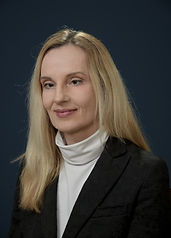
Dr. Tanja Bukovčan was born in 1975 in Zagreb. Between 1991 and 1993, she obtained an International Baccalaureate diploma. In 2001, she graduated with a degree in English language and literature and ethnology from the Faculty of Humanities and Social Sciences, University of Zagreb. Since 2003, she has worked as a research assistant on a project led by Dr. Tihana Petrović Leš from the Department of Ethnology and Cultural Anthropology at the Faculty of Humanities and Social Sciences in Zagreb. From 2007, she collaborated on another project under the direction of Dr. Branko Đaković at the same department. She was also involved in an international research project at York University, Canada. In December 2008, she defended her doctoral dissertation titled Ethnological Research of Medical Systems: Medical Pluralism in Croatia at the University of Zagreb.
Her postdoctoral research focused on new methodologies in medical anthropology, which she conducted in 2010 at the Institute for Advanced Studies in the Humanities, University of Edinburgh, UK, as a recipient of a full scholarship from the university. She is currently an associate professor at the Department of Ethnology and Cultural Anthropology, Faculty of Humanities and Social Sciences, University of Zagreb. Her main areas of research interest are medical and visual anthropology. Additionally, she has taught courses in cultural anthropology and specific topics in medical anthropology at the Faculty of Textile Technology and the Faculty of Medicine, University of Zagreb. During the winter semester of the 2020/2021 academic year, she taught the course Medical Anthropology at the University of Ljubljana.